Why plywood, and why the burn marks stay
Every material argues with the laser differently. Here's what we look for in a sheet — and why we stopped sanding the edges clean.
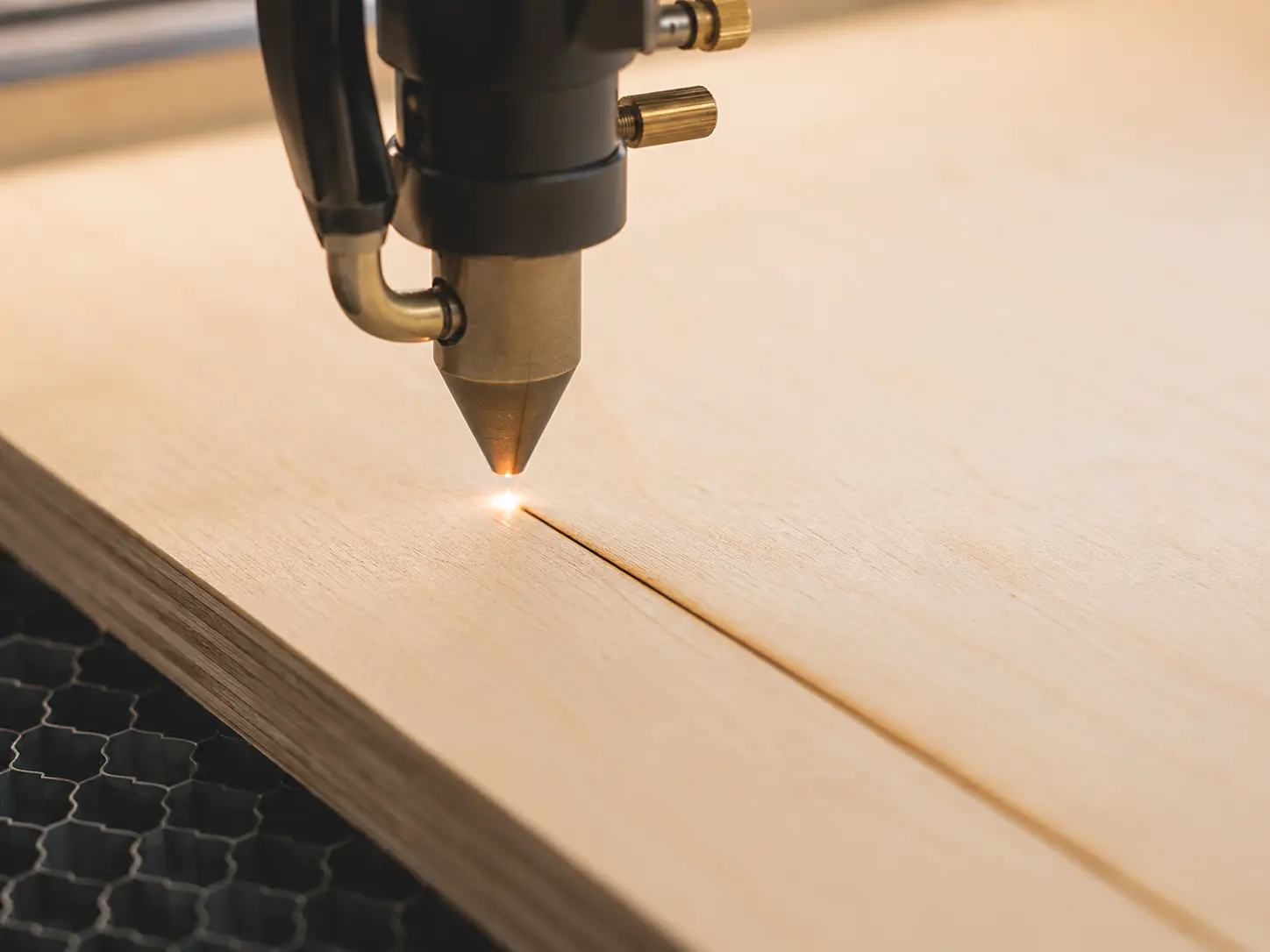
Plywood is not a neutral surface. Density, resin content, the number and evenness of the plies, how the glue behaves under heat — all of it changes what comes out the other side. Push identical settings through two different sheets and you get two different objects.
So the sheets get chosen carefully rather than cheaply. What matters: a pale, even face so the contrast between cut and uncut reads clearly at low light; consistent plies with no internal voids, because a hidden gap turns into a ragged edge exactly where the cut crosses it; and enough stability that a thin panel won't cup after a few weeks near a lit bulb. A quiet grain helps too — a loud one fights the engraved image for attention.
The burn marks were a harder call. The instinct is to sand them off, because they look like a defect. But sanded edges make the whole thing look printed — flat, machine-neutral, like it could have come from anywhere. The scorch line is the honest record of how the object was made: something that was cut by heat, slowly, one pass at a time. So it stays.
Every lamp in the shop started as one of these stories.
Shop now